

Blog / Rochester Toyota Service

4 Ways to Tell When You Need a New Car Battery

4_Ways_to_Tell_When_You_Need_a_New_Car_Battery_637559925817135404

Your car battery is part of what makes your vehicle function, and it's far too easy to let it die. Most of the time you can jump it and it's as good as new. Other times you're going to need a new car battery. So, wherever you are, make sure you know a good technician who can replace the battery for you. We have some right here in Rochester, MN who'll be happy to help - so let's talk about when it's time to get your battery changed.

1. Your Engine Starts Slow - Not Uncommon in Rochester, MN!

A slow-starting engine or a car that won't start at all is a signal for some people that they need to consult their friend with the jumper cables. However, this won't work forever. Like anything, over time the battery wears out and the components stop working as effectively. It starts taking the battery longer to charge up and so turning the engine on takes longer.

If your start times have been getting longer it's time you had a professional look under the hood. Your battery is most likely on its last legs and someday soon your car just won't start. Although, if it's winter and you're lucky it's may just be the cold weather impacting the battery - we all know how snowy it can get during Minnesota winters. Still, it's good to get things checked out anyway.

2. Electrical Faults

If the electrics in your vehicle aren't working properly then it's usually the battery's fault. This includes components like the radio, the dash, and the lights. The battery powers all of these and if it's not charging effectively then the components aren't going to work. This leads to dim lights and a lazy radio, and goodness knows what can go wrong with your dash.

While this is happening, avoid plugging things into the vehicle's USB slots. Keep the radio off, limit your infotainment use, and try to avoid using lights as much as possible. Go get your battery charged out so you can return to using all of your vehicle's amenities.

3. Foul Smells

There are a lot of faults that create unpleasant aromas in a vehicle, from old tires to brake fluid leakage. The battery is another culprit. If the battery shorts out it may start leaking gas. The smell can leak into the cabin, or it could be contained under the hood. You'll usually recognize it as a smell like rotten eggs - so get your battery checked out and replaced.

4. Ashy Substance

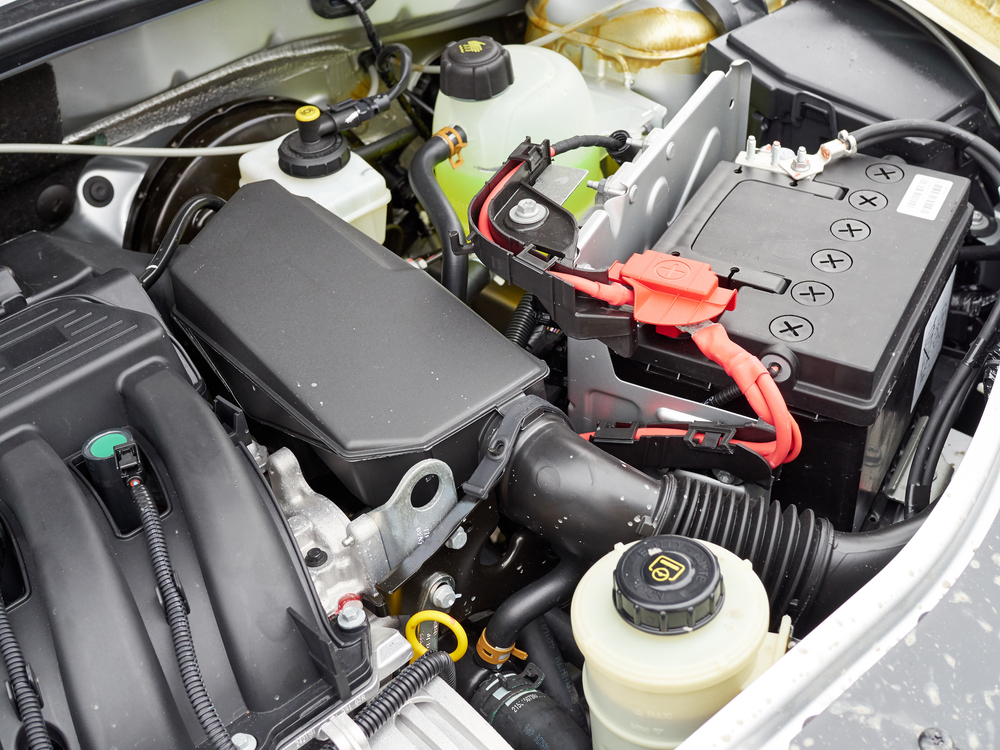
When you're under the hood you should always inspect everything that's under there. While inspecting your battery you need to keep an eye out for an ash-like film on your battery's metal components. This is the result of corroded connectors which is a sign you need to replace your battery. If you don't replace it you're going to have trouble starting your vehicle very soon.
Do you need a new battery? Come and see us at Rochester Toyota and we can take care of that for you. We can handle all makes and models, not just Toyota vehicles.
Posted in:

Related Posts

download - 2022-06-24T113704.534

Does Your Toyota Need an Alternator Repair?

The alternator is the heart of your electrical changing system. Its purpose is to produce the power to supply your car's electrical systems needs. The alternator works continually while your car is moving, and only shuts off when you switch off your engine. The hard-working alternator will eventually show signs of wear, and you'll need an alternator repair. As your Toyota dealer, we can help you with a repair or replacement. more Signs You Need an Alternator Repair at Your Toyota Dealer Dead Battery A potential sign of a weak alternator is a dead battery. If your battery is less than three years old and dies, the alternator is a possible cause. Your alternator is responsible for charging your battery. In normal circumstances, the power used by your battery to start your engine and maintain the electrical system will be replaced by the alternator. As your alternator starts to weaken, it will generate less power. This process may take time before its noticeable, as an alternator has surplus electrical capacity. The problem starts when the alternator isn't able to supply all of your car's electrical needs. Your electrical systems will receive less power, and the alternator won't be able to fully charge your battery. Without a continual recharge, your battery will die. Damaged Wiring The electricity generated by your alternator has to be moved to the systems that need it. This is accomplished by a network of cables and wires that spread throughout your car to transmit power. The hot, constantly-moving environment of your engine isn't an easy place for electrical wiring. The cables and wires are protected by thick plastic insulation and additional rubber protection. The wiring in your car, like all other wirings, can wear and break. A broken wire can't transmit electricity, and this will shut down the component it was supplying power to. The alternator, however, will continue to transmit power along the broken wire. The electricity will heat the wire, and this can cause the insulation to burn. If you smell the odor of burning plastic, your wiring is probably damaged. Battery Warning Light The battery warning light represents your car's electrical generation system. It's connected to sensors that monitor the alternator, the battery, and the electrical connections. These sensors continually send information to your car's computer, which makes decisions based on this information. This warning light can signify a problem with the alternator. The alternator generates 14.5 volts when it's healthy. If the alternator is under a full load, it will still provide approximately 13.5 volts. When a weak alternator produces less than 13 volts, the sensor attached to the alternator will inform the computer. A charge this low means the alternator is wearing out. Although this light isn't conclusively an alternator problem, we advise getting it checked ASAP. A weak alternator can cause numerous problems with your Toyota. If you have any of these signs, or your car doesn't feel right, call our service department at Rochester Toyota. Our Toyota-certified technicians can repair any problem for you.

6_Reasons_to_Get_Your_Toyota_Repair_at_a_Dealership_637496714132724179

6 Reasons to Get Your Toyota Repair at a Dealership

Car repair is never fun, and most people want to get it done the quickest and the cheapest way possible. However, you should think carefully before deciding on a repair facility. If you want it fixed right the first time, there are clear advantages to going to a dealership for your Toyota repair. more 1. Proper Diagnosis Your car repair is only as good as its diagnosis. Unqualified mechanics who work on all makes of cars oftentimes don't have the proper equipment. Modern vehicles are complex and often need computer diagnostics that are unavailable outside of the dealership. 2. Experienced Technicians This may be the most critical reason to get repairs done at a dealership. All technicians are factory-trained and specialize in one particular brand. That means superior knowledge and experience fixing your exact make of car. Technicians at dealerships get continuous training about new developments and recalls on your particular model. Taking care of recalls can be especially important for safety reasons. 3. OEM Parts Original equipment manufactured parts, also known as OEM parts, are always used at dealerships. Other shops mostly use aftermarket parts, which are made by other manufacturers. Sometimes they're cheaper, but there's a reason for that. Many times aftermarket parts are made with inferior materials that can break or fall apart easily after installation. That can cause catastrophic damage to your vehicle, and you'll be responsible for the repair bill. 4. Service Advisors When you come in for a repair, a service advisor will greet you and get your information about what's going on. He or she can then determine the best way to proceed. You'll get an estimate, and you can then decide whether your want to go ahead with the repair. Also, all of your repair records are kept in the database if you need them in the future. 5. Warranty An excellent reason to get your repairs done at a dealership is the warranty. Usually, it's at least a one-year warranty on parts and labor, so if something does go wrong, it will be covered. Also, if your vehicle is repaired incorrectly somewhere else and something goes wrong, it can void your manufacturer's warranty. Then repairs can get really expensive. 6. Quick Turnaround Transportation is essential in today's world. And if you're on a tight schedule, getting your car repaired is never convenient. Because dealers have adequate staff and can handle many repair orders at once, you'll likely get it done much faster at a dealership. Another reason repairs are quicker at a dealership is because the parts are right there. Independent shops need to order parts and wait for them to get shipped while your car sits in the shop. It's not very efficient if you're in a hurry. It just makes sense to get your vehicle repaired where they have the most experience. Don't compromise. When you need repair or service on your Toyota, give us a call at Rochester Toyota. We have the knowledge and experience to fix it right and get you back on the road quickly.

3 Out of the Box Ways to Make Your Vehicle Last Longer

Vehicles are a significant investment; besides a house, they are one of the largest purchases that you can make. So getting the most out of your vehicle should be a focus. Quality products, routine maintenance, and following the suggested levels and pressures are all great ways for improving the life of your vehicle. Check out these three out of the box ways to make your vehicle last longer. Invest in Synthetic Oil One of the main ways to ensure the longevity of your vehicle is to keep up with scheduled oil changes. What some people may not know is that synthetic oil is better for your vehicle's engine system. It costs more but is worth it in the end, especially if you can get more years and miles out of your car. Why is synthetic oil better for your vehicle?  Synthetic motor oil can withstand extremely high temperatures while resisting the breakdown that occurs with oil. It also maintains the lubrication longer than standard oil, which helps with fuel economy. Turn Those Tires Tire mileage is significant not only for your vehicle, but also for your safety. Tires break down from more than just mileage; age, temperature changes, and exposure to UV rays can also shorten their lifespan. Tires are incredibly flexible when they are first put on, but over time they lose that flexibility. They also lose tread from driving. Pressure also has a lot to do with how long your tires will last. Being over or underinflated can cause tires to deteriorate faster. Maintaining your tires at the recommended air pressure, as well as getting them routinely rotated and aligned can make the life of your tires, and your vehicle, last longer. How do you know when you need to get new tires? Age and tread depth are two key indicators. At approximately five years old, the flexibility is most likely gone, and you may begin to see dry rot. Also, if you notice that your tires have little tread left, it is time for new tires. Keep it Cool Your air conditioning system can be a costly repair if you do not take care of it via routine maintenance. Let's face it, a car without air conditioning can also cause you to want to get a different car, which is also expensive. There are a few things you can do to guarantee that you get the most out of your air conditioning system and keep it running well. In the spring, have your air conditioning system inspected and checked for leaks. Get the refrigerant filled if needed and any leaks fixed before they cause a major issue. Keep your car cool and save yourself some time and energy in the long-run. Rochester Toyota is not only your dealership for new cars, but also for keeping the car you have in good shape. Contact us today to talk with one of our trained professionals on how to get the most of the vehicle you have. Image by iboy_daniel is licensed under CC-BY-SA 2.0